
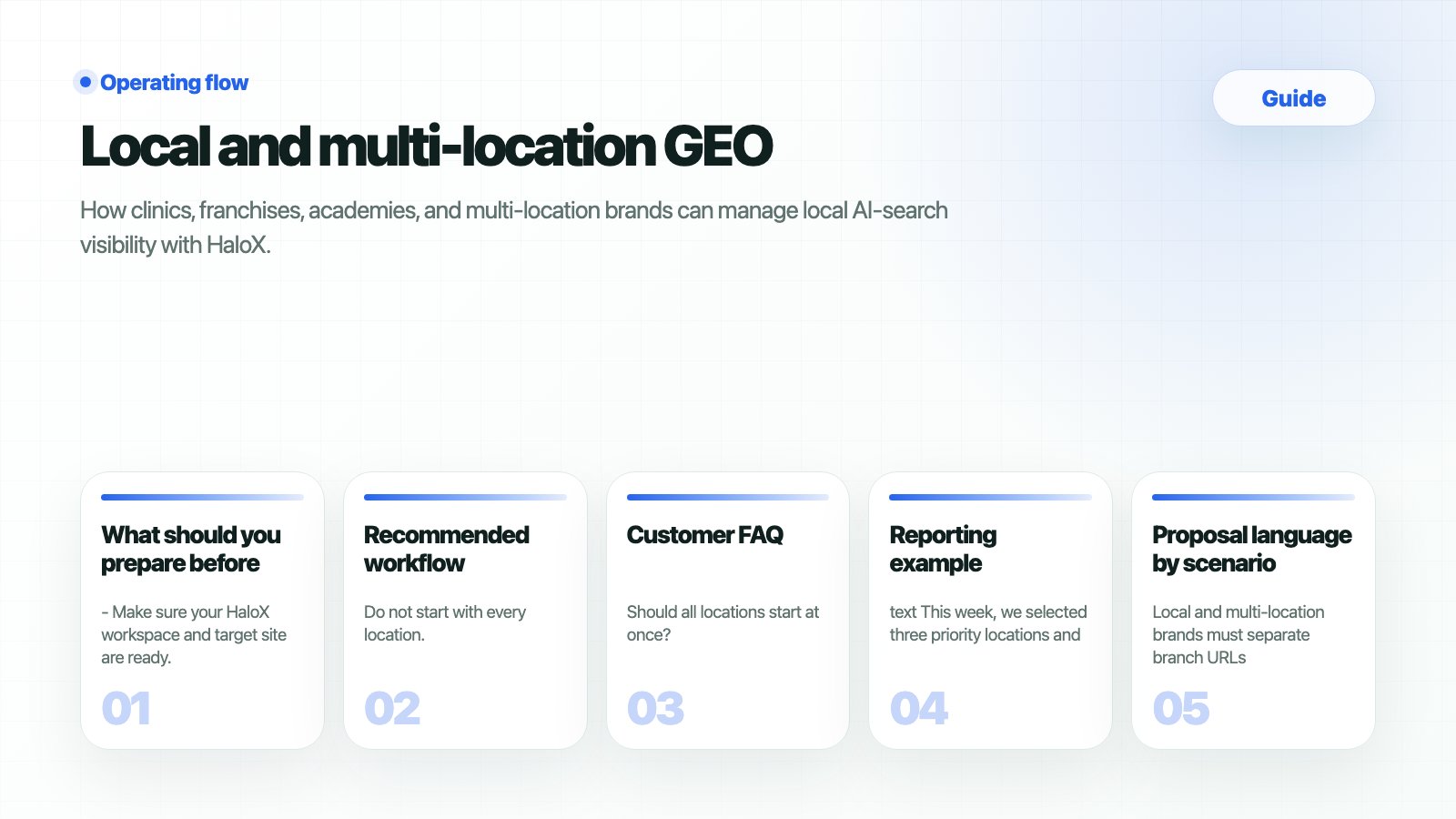
What should you prepare before starting?
- Make sure your HaloX workspace and target site are ready.
- Keep GSC/GA4 access and any existing SEO or meeting notes nearby.
- Decide where the output will live: internal note, client report, or weekly operating document.
How do you verify the result?
What commonly blocks teams?
Local GEO questions from meetings
Recommended workflow
1
1. Define target locations and URLs
Do not start with every location. Select priority branches, categories, and representative URLs first. URL structure affects audit interpretation and operating scope.
2
2. Build location prompt sets
Separate location + service questions from recommendation questions. Then keep service comparison, pre-visit, and foreign-visitor questions as their own sets.
3
3. Audit location-page readiness
Inspect schema and metadata first. Then check headings, performance, bot access, and branch-information consistency.
4
4. Build blog and FAQ clusters
Create at least three connected assets per priority topic: service selection criteria, branch FAQ, visitor guidance, and evidence-based explanations.
5
5. Report leading indicators before revenue attribution
Track AI exposure, citations, local prompt share, site visits, and page improvements first. Treat direct revenue attribution as a later layer.