
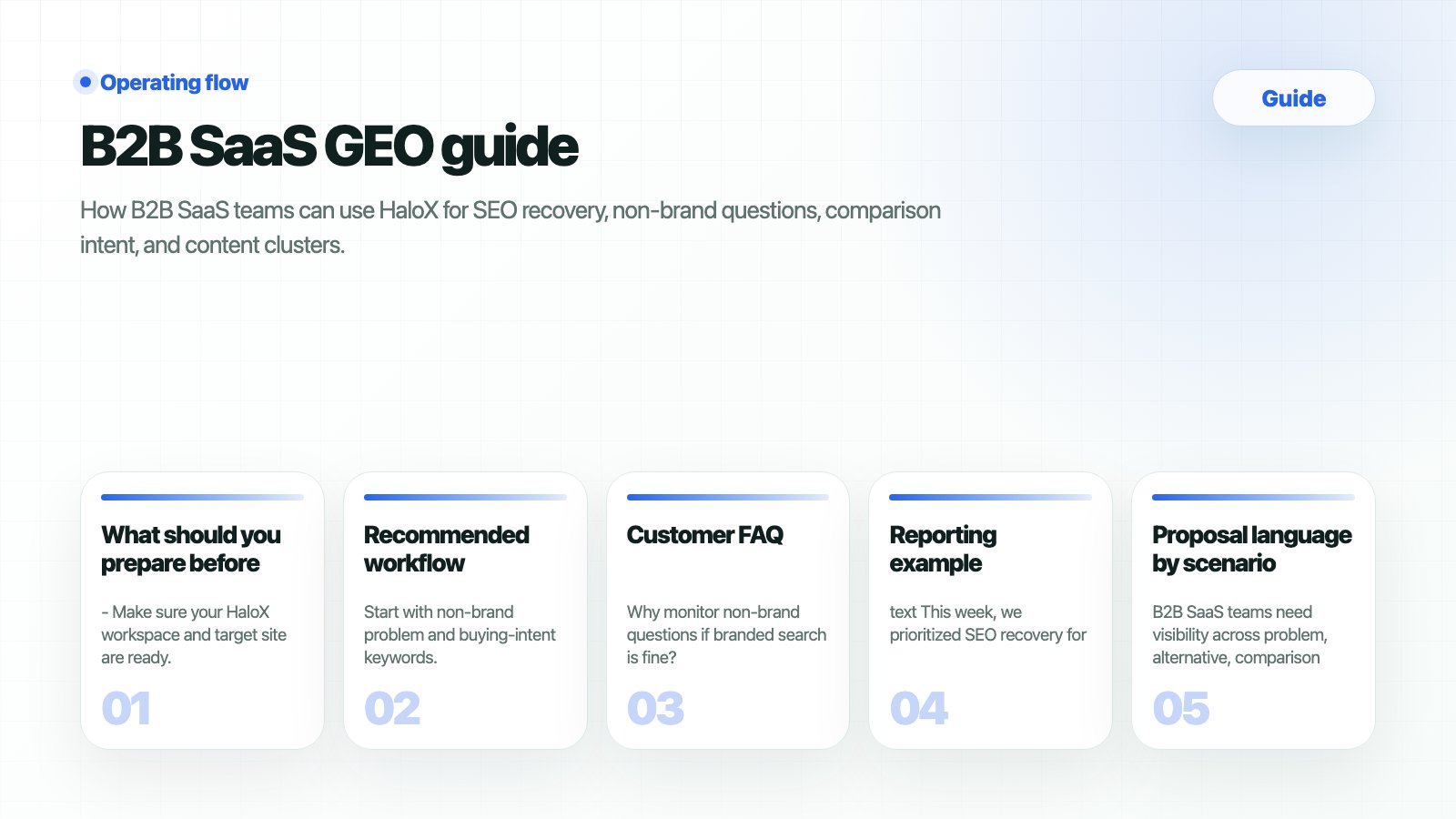
What should you prepare before starting?
- Make sure your HaloX workspace and target site are ready.
- Keep GSC/GA4 access and any existing SEO or meeting notes nearby.
- Decide where the output will live: internal note, client report, or weekly operating document.
How do you verify the result?
What commonly blocks teams?
Operating principles from customer conversations
Recommended workflow
1
1. Choose the priority recovery keywords
Start with non-brand problem and buying-intent keywords. For declining pages, inspect titles and meta descriptions first. Then review categories, tags, and internal links.
2
2. Split clusters in Strategy Map
Use list and matrix views to separate brand and problem clusters. Network view helps connect alternative, comparison, and how-to clusters.
3
3. Produce cluster assets in Content Factory
Build definition pages, comparison pages, checklists, FAQ, and case content. Add numbers, tables, evidence, and source links so AI answers can cite the asset.
4
4. Check AI-answer citation visibility
Monitor whether the brand appears, whether owned assets are used as sources, and which competitors are repeatedly present.
5
5. Separate SEO recovery and GEO expansion in reports
Report ranking, visibility, and audit fixes first; then add citation rate, prompt coverage, and competitor gaps.