What should you prepare?
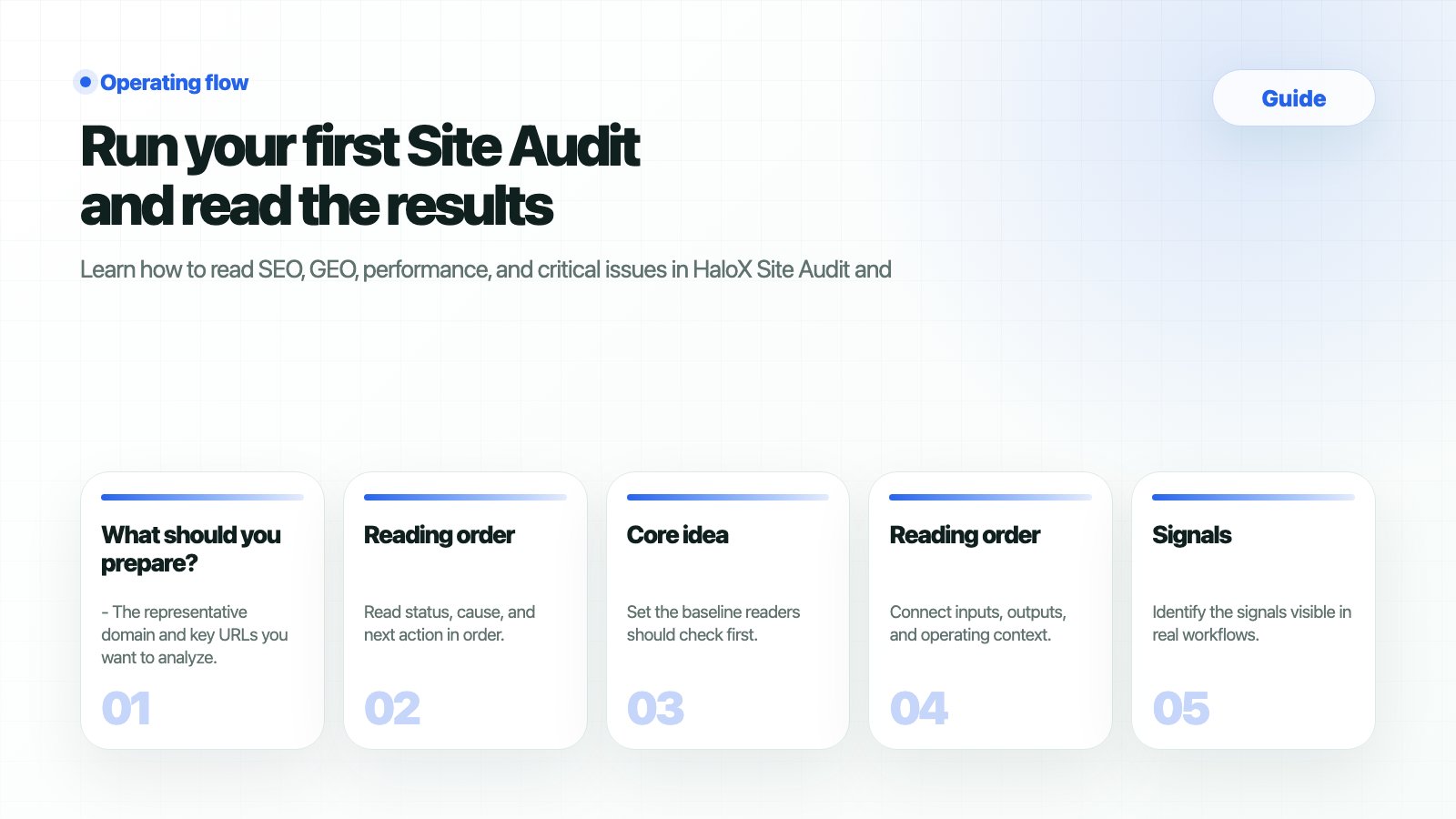
- The representative domain and key URLs you want to analyze.
- Page groups such as homepage, product pages, newsroom/blog, FAQ, and local pages.
- A place to create development tickets or content tasks.
- A simple table for reporting cause, impact, and next action.
How do you verify the result?
What commonly blocks teams?
Reading order
1
1. Start with important issues
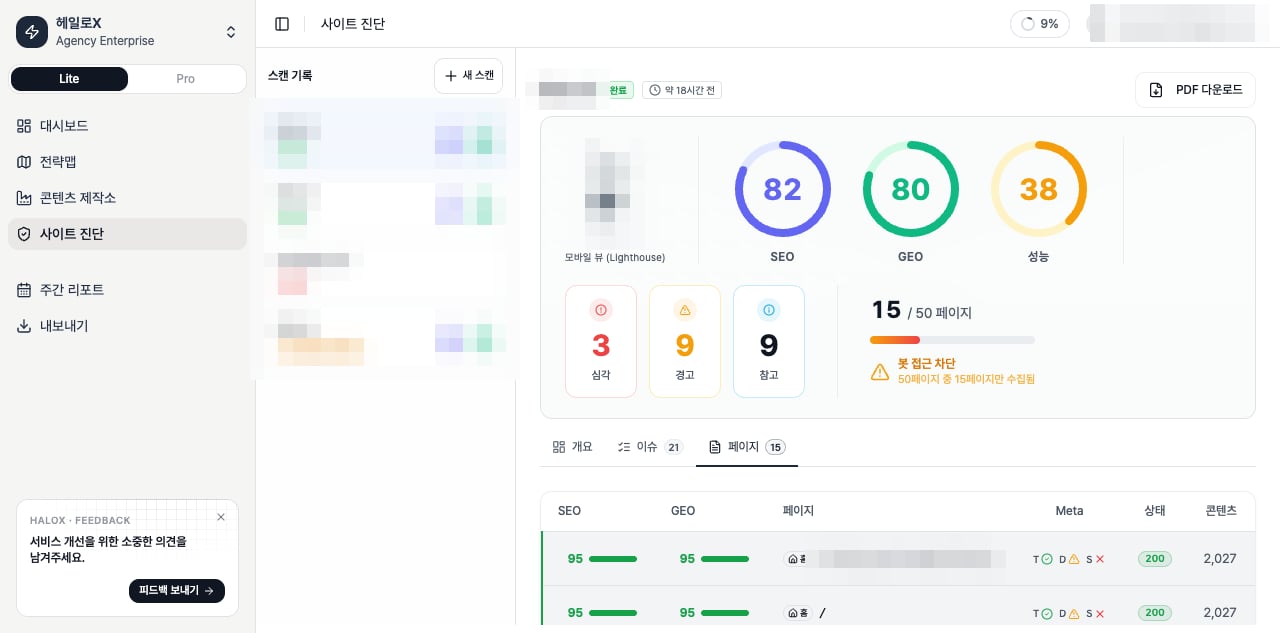
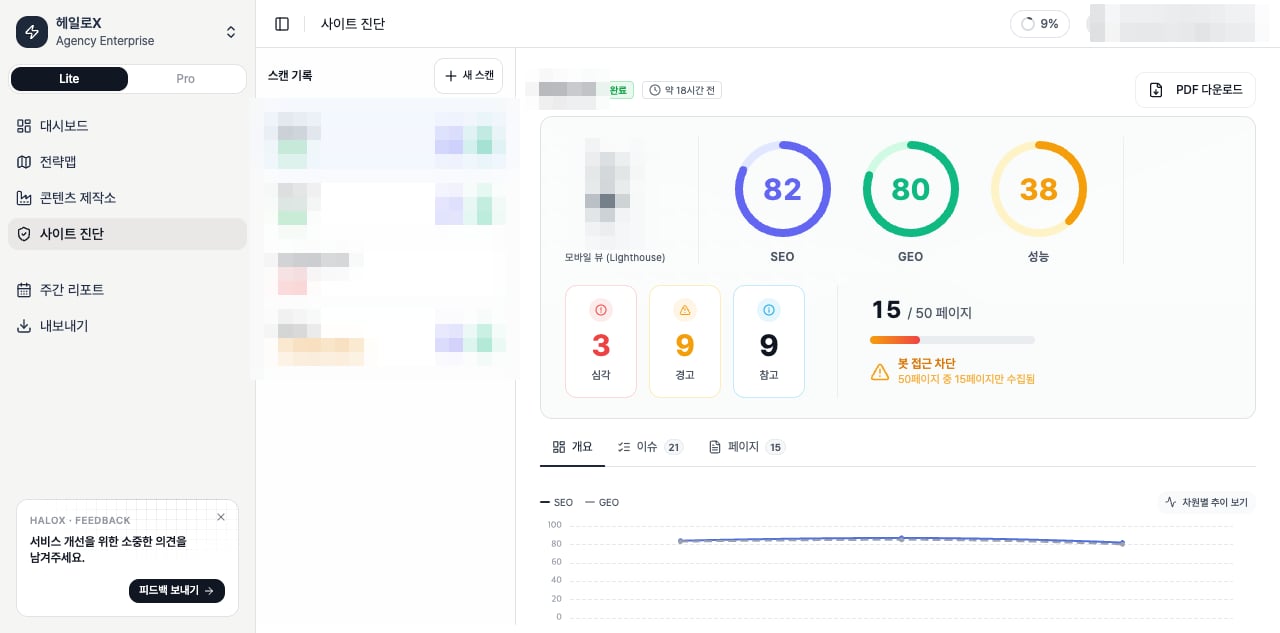
A high score matters less than whether AI and search engines can read the site at all.
2
2. Separate SEO and GEO
SEO is the search foundation. GEO is readiness for AI-answer sources. Weak SEO usually makes GEO unstable.
3
3. Assign roles to pages
Homepage defines the brand, product pages explain value, newsroom pages provide official messages, FAQ answers questions, and local pages provide branch signals.
4
4. Split work by owner
Developers, content teams, PR teams, agencies, and customer approvers should each get different tasks.
5
5. Move priorities into Strategy Map
Do not fix everything at once. Connect high-impact URLs to clusters and questions.