
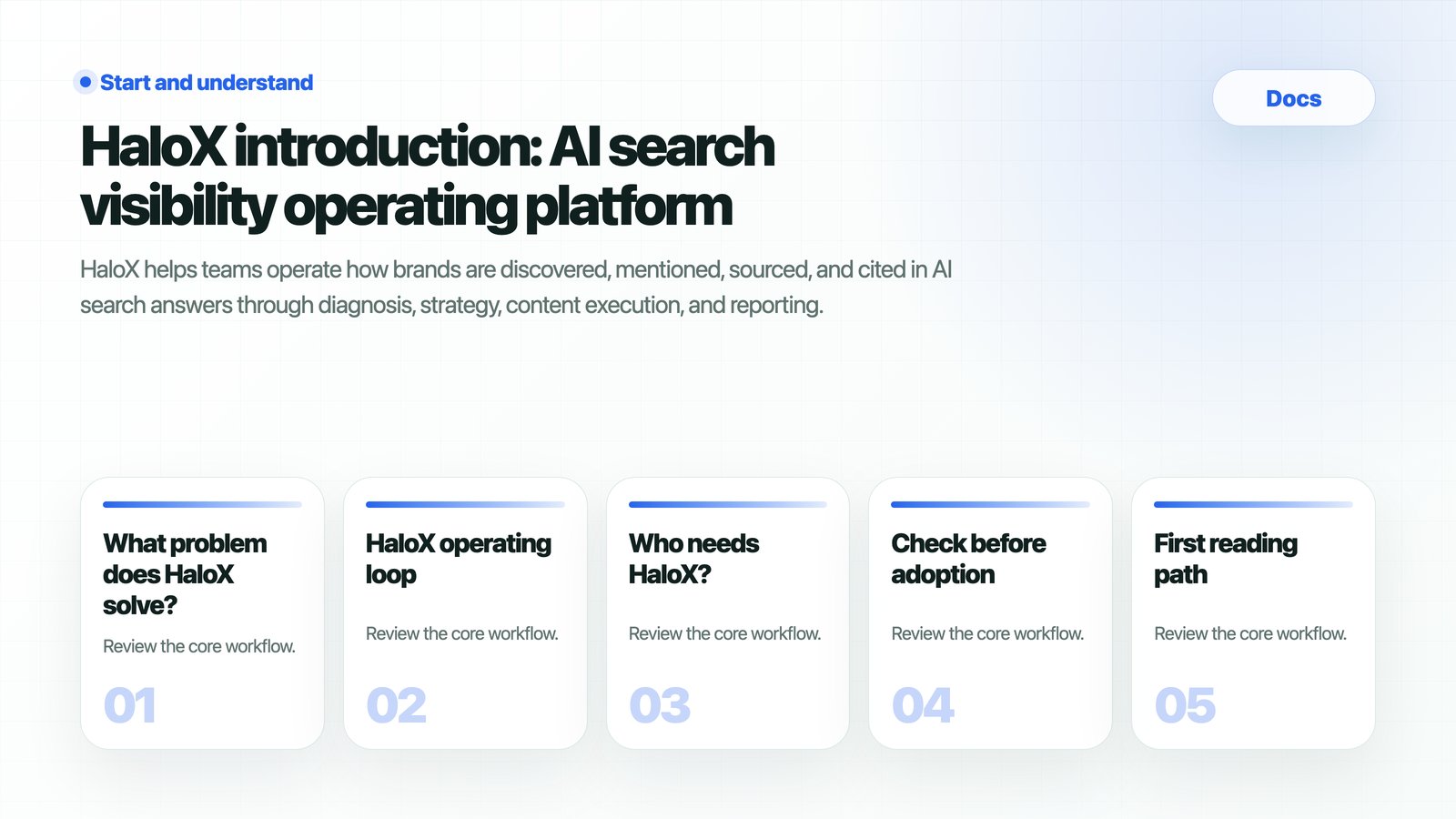
What problem does HaloX solve?
In AI search, users often see an answer before they see a list of links. If your brand is missing from the answer, mentioned without an official source, or explained through competitor content, traditional SEO metrics alone cannot explain the issue. HaloX separates the problem into four states.
If the problem is already visible, start from a problem-led guide instead of a feature list. Use Brand missing from AI search when the brand is absent, Get mentioned in ChatGPT for recommendation prompts, and How to appear as a source in AI answers when official pages are not selected as evidence.
HaloX operating loop
1
1. Diagnose site and AI access
Use site audit to check web health, AI bot access, schema, performance, metadata, headings, and page issues.
2
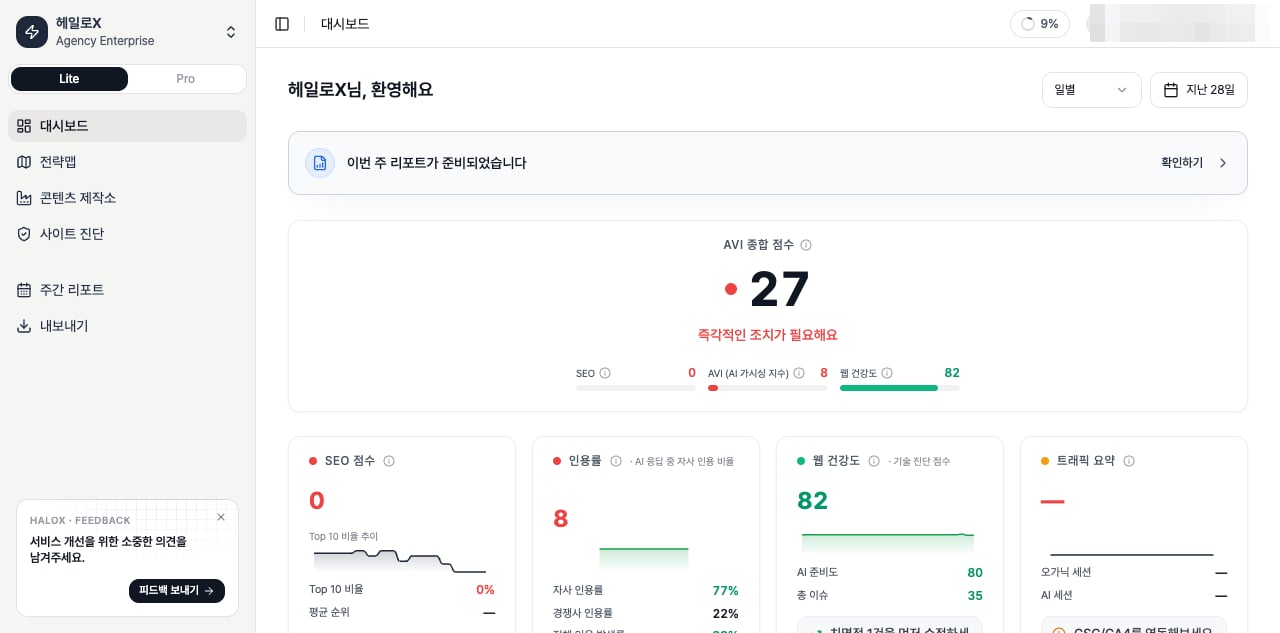
2. Measure AVI and citation rate
Read AVI, citation rate, source visibility, brand mentions, and question coverage as operating signals, not as one isolated score.
3
3. Choose questions and keyword clusters
Segment brand, non-brand, comparison, buying, and local questions, then prioritize them in the strategy map.
4
4. Strengthen content and sources
Use Content Factory to produce citation-ready structures with definitions, FAQs, comparison tables, evidence, and trust reports.
5
5. Report weekly changes
Re-measure the same question set and summarize changes, risks, and next actions for clients, executives, or internal teams.
Who needs HaloX?
Check before adoption
First reading path
Quickstart
Check the workspace, site audit, and dashboard in the first 30 minutes.
Adoption planning
Choose the starting flow by team type and first 30-day scope.
Product feature map
See how dashboard, site audit, strategy map, Content Factory, and reports connect.
Operating guides
Choose the right guide for the current task.
AI search problem fixes
Start from brand absence, competitor-only answers, or missing citations.
Free diagnosis keywords
Design AI visibility checks and ChatGPT brand mention checkers as lead assets.
Route from Docs to the app
After the reader understands the problem, move the actual inputs into the app. The minimum first-diagnosis package is primary URL, brand name, target prompts, competitors or alternatives, and source candidates.Start AI search diagnosis
Enter the primary site and target prompts to create the AVI, brand mention, and source visibility baseline.
Free diagnosis keyword path
Design AI visibility diagnosis and ChatGPT brand mention checks as lead assets.
First 30-minute checklist
New teams can create the first report sentence from the quickstart workflow.
Choose an adoption plan
Pick the first operating scope for internal, agency, PR, B2B, or local-brand teams.
One-sentence customer explanation
“HaloX helps teams operate how their brand is discovered, mentioned, sourced, and cited inside AI search answers through scores, product workflows, content execution, and weekly reporting.”