
What should you prepare
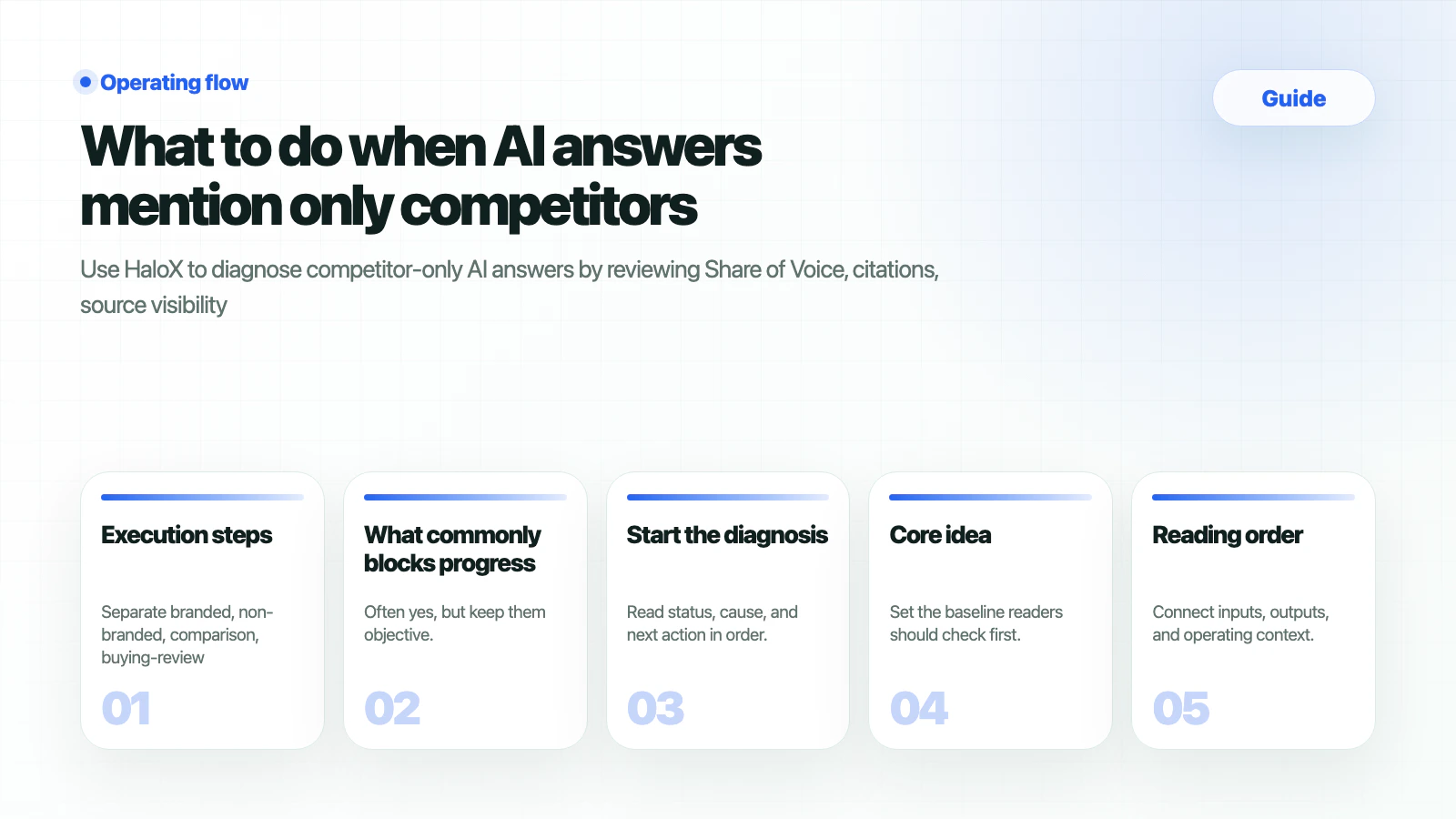
Execution steps
1
1. Split the prompt market
Separate branded, non-branded, comparison, buying-review, and vertical recommendation prompts.
2
2. Read Share of Voice with AVI
Use GEO Dashboard and AVI to compare brand and competitor visibility.
3
3. Decompose competitor citations
Record competitor URLs, media, directories, reviews, and community sources that support the answer.
4
4. Build comparison and source content
Add comparison criteria, alternative positioning, FAQs, official evidence, and offsite-source tasks to the content brief.
How do you verify
What commonly blocks progress
Should we write direct comparison pages?
Should we write direct comparison pages?
Often yes, but keep them objective. Compare criteria, audience fit, strengths, limitations, and alternatives without attacking competitors.
What if offsite sources are weak?
What if offsite sources are weak?
Strengthen owned pages and build external evidence through PR, partner pages, directories, reviews, and case studies.
Is one positive answer enough?
Is one positive answer enough?
No. Track repeated prompt sets and citation candidates weekly.
Start the diagnosis
Move the brand name, primary URL, competitors, and problem prompts from this guide into the HaloX app. Docs explain the decision criteria; the app shows the live scores, evidence, and report workflow.Start in the HaloX app
Enter the primary URL and target prompts to create the first AI visibility baseline.
First 30-minute checklist
New teams should confirm the workspace, site diagnosis, and first report sentence.
Free diagnosis lead asset
Connect AI visibility diagnosis, ChatGPT brand mention checks, and Perplexity source checks to lead capture.
Adoption planning
Choose the first 30-day operating scope for internal, agency, PR, B2B, or local-brand teams.