
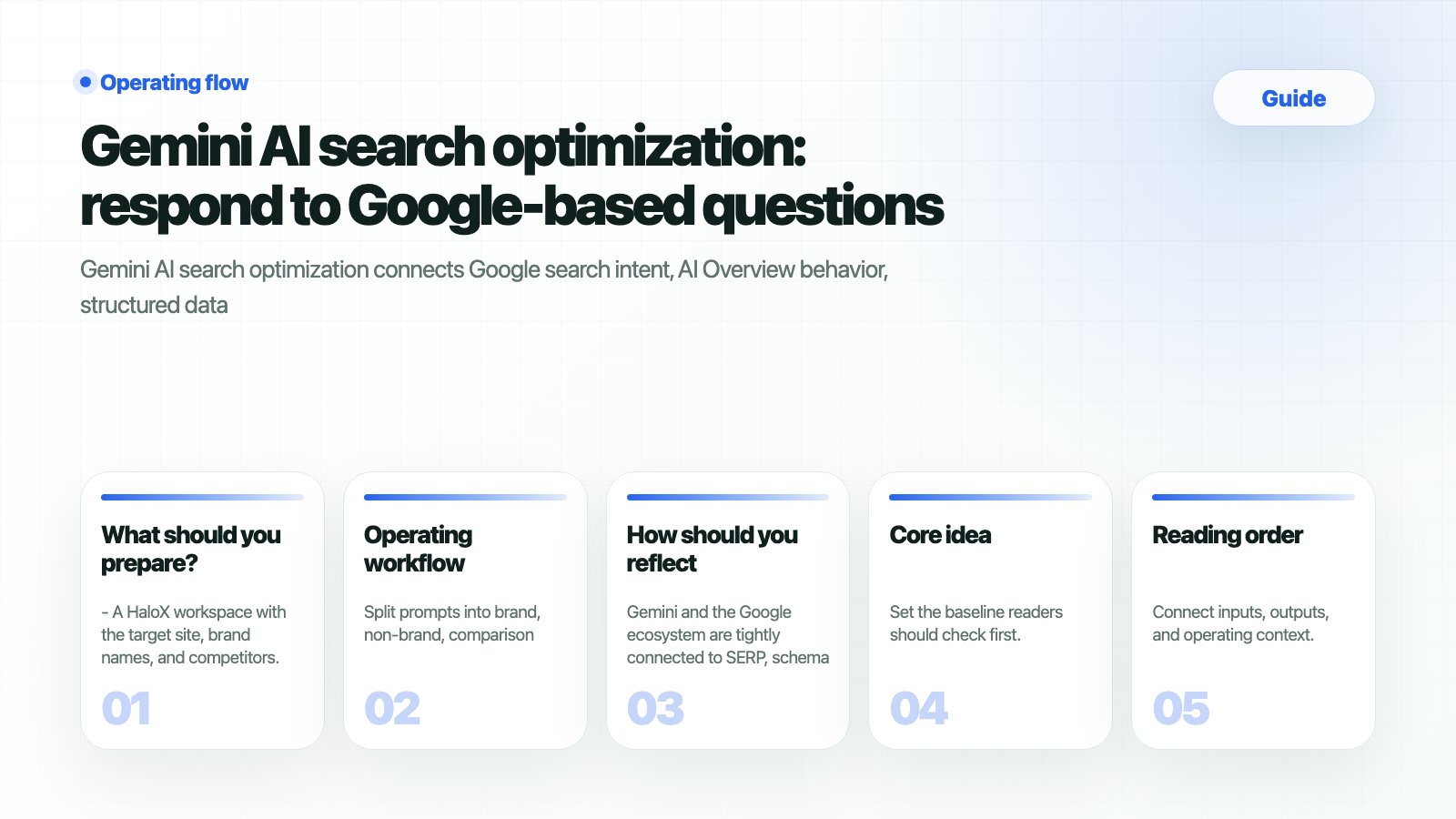
What should you prepare?
- A HaloX workspace with the target site, brand names, and competitors.
- Strategic questions from SEO research and sales calls. Add customer-support and product-positioning questions when they change buying intent.
- Public pages that can act as answer sources. Start with product pages and docs, then add FAQs, comparison pages, case studies, and press coverage.
- A place to record decisions, owners, and follow-up content tasks.
How do you verify the result?
What commonly blocks teams?
Operating workflow
1
1. Define the strategic question set
Split prompts into brand and non-brand questions first. Keep comparison and buying-intent questions as separate sets.
2
2. Measure current answer state
Check brand mentions first. Then review competitor exposure, citations, source visibility, and answer accuracy.
3
3. Choose the source and content gap
Decide whether the gap is a missing official page or a weak source. If neither explains it, check technical and reporting issues.
4
4. Create answer-ready content
Add definitions and comparison tables that AI systems can summarize reliably. Use FAQs, evidence, and links to support the answer.
5
5. Review weekly in HaloX
Track AVI and citation rate each week. Use source visibility and question coverage to explain the movement.